
School security in Hawaii has expanded well beyond a guard at the front entrance. A modern school security system ties together cameras, access control, visitor check-in, and indoor air monitoring in one software platform that administrators can reach from any device. For Hawaii campuses there is an added dimension: your schools may sit on different islands, and management has to work just as well across the water as it does across the hall.
We have installed and supported campus systems at schools across Oahu, Maui, and the Big Island, and the questions administrators ask follow a consistent pattern. This post walks through the five essentials of school security we get asked about most: cameras, access control, visitor management, multi-campus oversight, and vape detection. It also covers how the equipment holds up in Hawaii’s coastal climate and what a local installation looks like.
School security cameras built for Hawaii’s outdoor environment
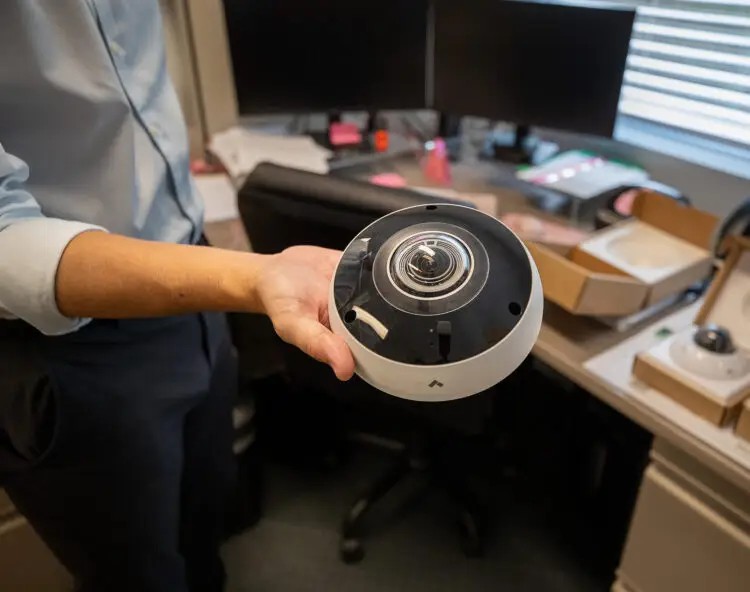
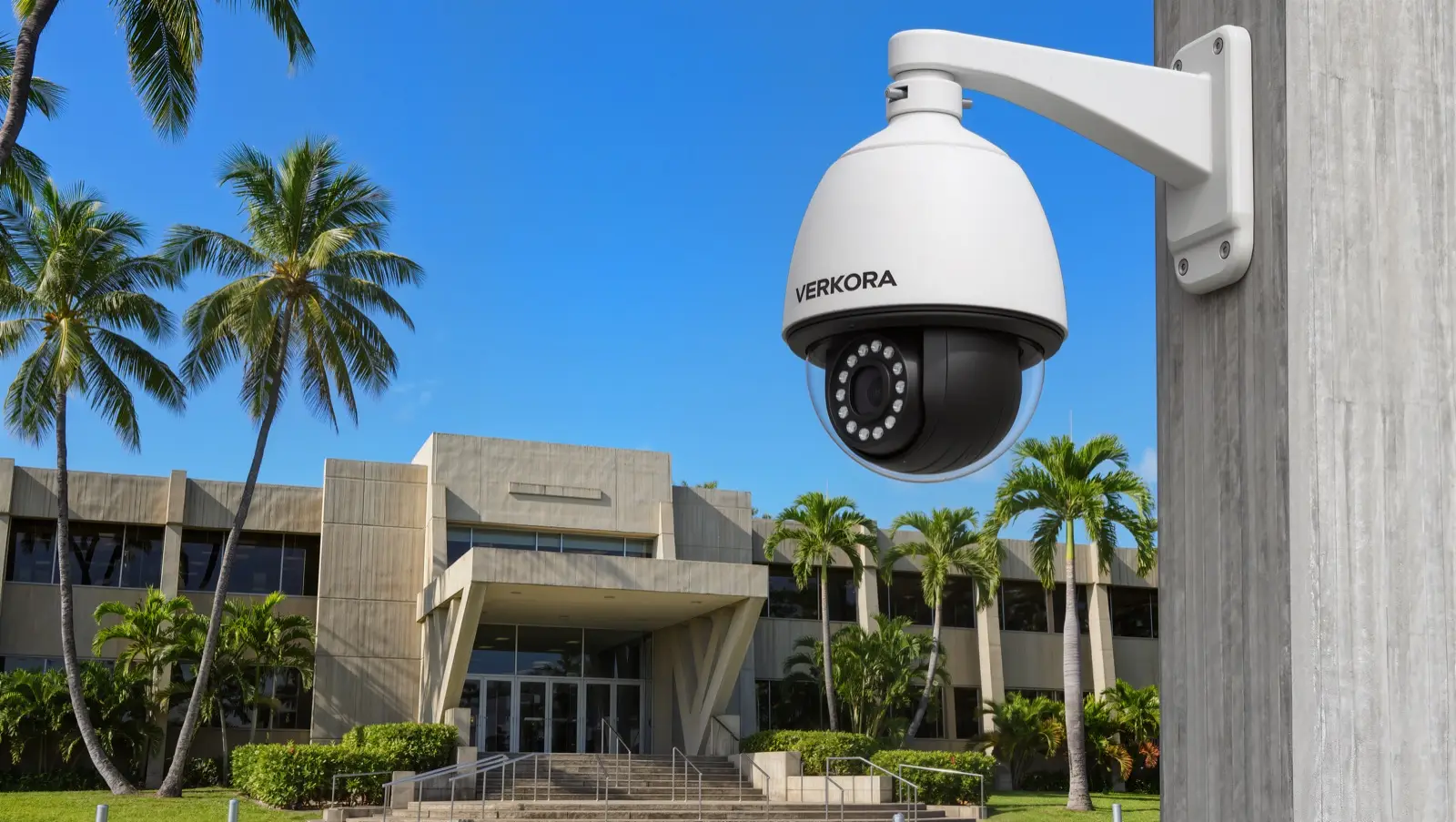
Salt air and steady humidity accelerate corrosion on camera housings and mounting brackets, and strong UV exposure fades lesser grade enclosures within a few seasons. The Verkada cameras we install use a weather resistant design, including a latch based cable gland that keeps the power and data entry point water tight. That detail matters more here than in most markets, because an exterior camera on a Hawaii campus lives in salt spray year round.

Beyond the housing, the cameras use AI powered detection to tell people, vehicles, and animals apart and to flag behavior worth a look, such as someone approaching a restricted area after hours. Footage lives in the cloud and on the camera itself, so a review starts in any browser at any time, with no tape to pull and no on-site recorder to log into.
Access control for every entry point
Modern access control replaces physical keys with digital credentials. Each door can carry its own permissions: staff members use a badge or a phone credential, and doors that should stay locked outside school hours do so on a schedule, without anyone having to remember to lock them. Every entry and exit is logged with a timestamp, which is useful for confirming who was in a building at a given moment.

Cameras and access control are stronger together, and pairing them is the step that turns two products into a school security system. When a credential is used at a door, the camera at that entry point captures a time stamped frame, so a visual record sits next to the digital log. Unusual access patterns, such as a credential used at an unexpected hour, raise an alert so the right person can follow up promptly.
Visitor management for busy front offices
Visitor management is the part of school security that a front office touches every day. Every visitor to a campus should be identified before reaching a classroom or common area. Modern visitor management systems scan a government issued ID, screen it against the watchlists a school chooses to maintain, print a dated badge, and log the visit. The whole process happens at the front desk in a matter of seconds and produces a complete record of who entered the campus and when.
For schools that see high visitor volume during events or parent meetings, the system handles the load without creating a bottleneck at the door. Front office staff see the log on screen and can clear or flag a visitor without leaving the desk.
Managing school security across multiple campuses
Hawaii campuses are spread across islands, and plenty of organizations here run more than one site. Traditional setups asked for a separate recording device, a separate access log, and a separate login at every campus. Cloud based management removes all of that.
With Verkada, a district administrator can pull live camera feeds, review access logs, or adjust door permissions for any campus on any island from one browser window. A principal on Maui and a security coordinator in Honolulu look at the same system at the same time, with no separate logins and no trip to a server closet. When a question comes up at a Big Island campus, the answer does not wait for someone to be on site.
Vape and smoke detection in restrooms
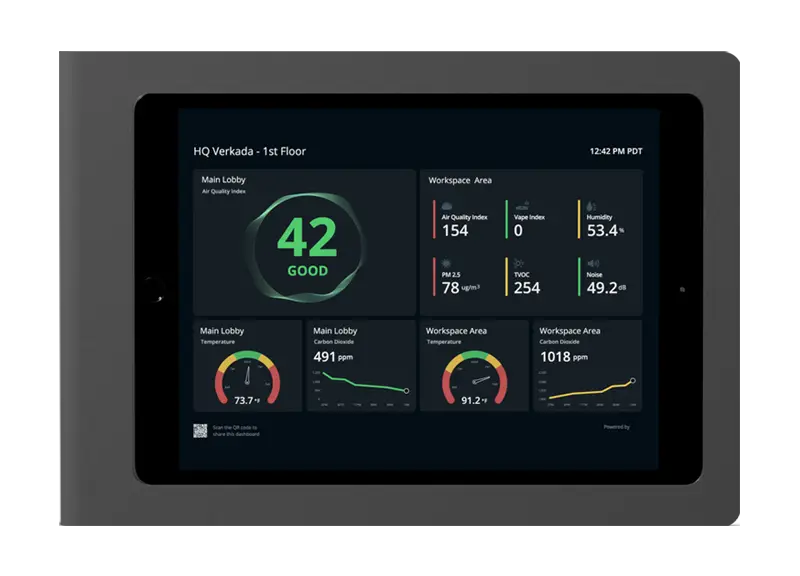
Air quality sensors extend school security into rooms where cameras do not belong. Vaping in school restrooms comes up in nearly every conversation we have with administrators, and cameras are not appropriate in private spaces. Verkada’s air quality sensors mount in restroom ceilings and detect the vapor signatures of common vaping devices. When a sensor identifies a match, it sends an alert to the administrator on call. No footage is captured, no privacy is given up, and the school can respond without waiting for a student report.
What a school security project looks like with a local team
Our own Hawaii team handles the full installation: site assessment, mounting, wiring, network integration, and staff training. We have offices on Oahu, Maui, and the Big Island, so response times stay short regardless of which island the school is on. The same team that installs the system supports it, and a question from a Maui campus reaches a local technician rather than a mainland call center.
Most school security projects start with a walk of the campus. We look at entry points, sightlines, existing cabling, and network capacity, then map what can be reused and what needs replacing. Schools often phase the work over a summer or across a budget year, starting with the doors and camera positions that matter most and adding to the same platform later. Because everything lives in one system, a second phase shows up in the same dashboard as the first.
Common questions about school security in Hawaii
Does a cloud system still work when the internet goes down?
Yes. The cameras keep recording to their onboard storage during an outage and sync back to the cloud once the connection returns, and door controllers keep enforcing the schedules and credentials already stored on them. The cloud is where you manage and review the system, not where the day to day work happens.
How long does a school security installation take?
It depends on the door and camera count and on how much usable cabling is already in place. A single campus with a modest camera count is usually a short project, while a multi building campus is normally phased. We include a schedule with the assessment so the work lands during breaks rather than class time.
Can a school keep the cameras it already has?
Sometimes. Older analog cameras generally do not carry over to a cloud platform, but existing cabling, conduit, and mounting points often do, and reusing them takes real cost out of a project. The assessment is where we sort out what stays and what gets replaced.
If you would like to talk through what school security could look like on your campus, we offer a free campus security review. It covers your current setup and the options that fit your size, layout, and budget, and it is a no-pressure conversation from start to finish. If you are weighing your broader technology support at the same time, our overview of managed IT services for Hawaii businesses covers what that includes.